

Disco…? Occasionally!
Dunking on the new Harry Styles and the pop industry, dubbing LCD Soundsystem the best band ever (again), and recommending cool, indie dance pop artists.


Harry Styles, a classic pop artist, is now dipping his toes into electronic music. “Aperture”, the lead single off his upcoming record Kiss All The Time. Disco, Occasionally, came out on Thursday, January 22. From the sound of it, he’s going — let me see if I got what Twitter called it — house? Techno? Acid and/or trance? Disco??? Well, it’s just pop music with synth loops. “Occasionally” works overtime as a qualifier for the disco-ing happening here.
I don’t know who told Styles dance music should be dull. Perhaps it was Tame Impala, whose laughably bad 2025 foray into acid and house gave us some of the driest, corniest, and least inspiring beats and progressions in recent memory. “Aperture” carries on with a similar ennui as Deadbeat’s lead single, “End Of Summer”. Its introduction powers on slowly and literally. A thrumming pulse, snappy clicks, a fan’s clunky whirrs, a gentle crescendo to a main acid touch laser beat — 45 seconds in, Styles’ soft-spoken, mellow voice emerges like a refreshing splash of water. One can probably visualize when the cursor glides across each new audio track on Ableton because this song was probably mixed one layer at a time. “Aperture” is fresh, especially for Styles, but no moment in this understated single is truly spectacular. It’s like watching a firecracker burn its fuse until it fizzles out, failing to explode into pretty colors.
Harry Styles cited LCD Soundsystem as his biggest influence — drawing inspiration from the euphoria experienced from watching them play — but, as someone who also recently went to an LCD Soundsystem concert and sweat all her makeup off dancing, I don’t believe he’s listening to the same band.1 Even on their slower electronic-based tracks like the airy romance of “oh baby”, the melancholic lull of “Someone Great”, or the crawling build-up of the iconic “Dance Yrself Clean”, they are experts at tension and release, at locating the exact point to collapse into technological, joyful frenzy. “Aperture” has all the literal bells and whistles of a This Is Happening song but none of the meat or bones. It can replicate the drawn-out progression, intermittent harmonies, constant circular motion, and sizzling percussion of “Pow Pow”, but it has no true desire for “Discovery! Discovery! Discovery! Discovery! Discovery! Discovery! Discovery!”
Lyrically, “Aperture” is just an updated version of Fine Line’s “Lights Up”. Musically, it’s more inert than the repetitive drone of LCDS’ “x-ray eyes”.
I don’t want Harry Styles to apologize to critics and James Murphy for wasting our time and “appropriating” our genre. A land acknowledgement would be silly; he can’t change his pop album now, and he won’t read this anyway. Moreover, this pop artist’s single roll-out schedule has been the same for four records now. The moody and melodramatic switch-up as the first single (“Sign Of The Times”, “Lights Up”, “As It Was”, and now “Aperture”) is obligatory. “Aperture” is also the first song of an album I won’t hear for a while; I still leave room to be pleasantly surprised.
I only feel inclined to roll up my sleeves against a dumb pop song when marketing f—ks with our heads. When we’re being sold a radical, bold, dramatic change for Styles…all while he burns his cash on a MIDI keyboard and still pushes out a radio-friendly power pop tune.
“So, You Wanted A Hit?”
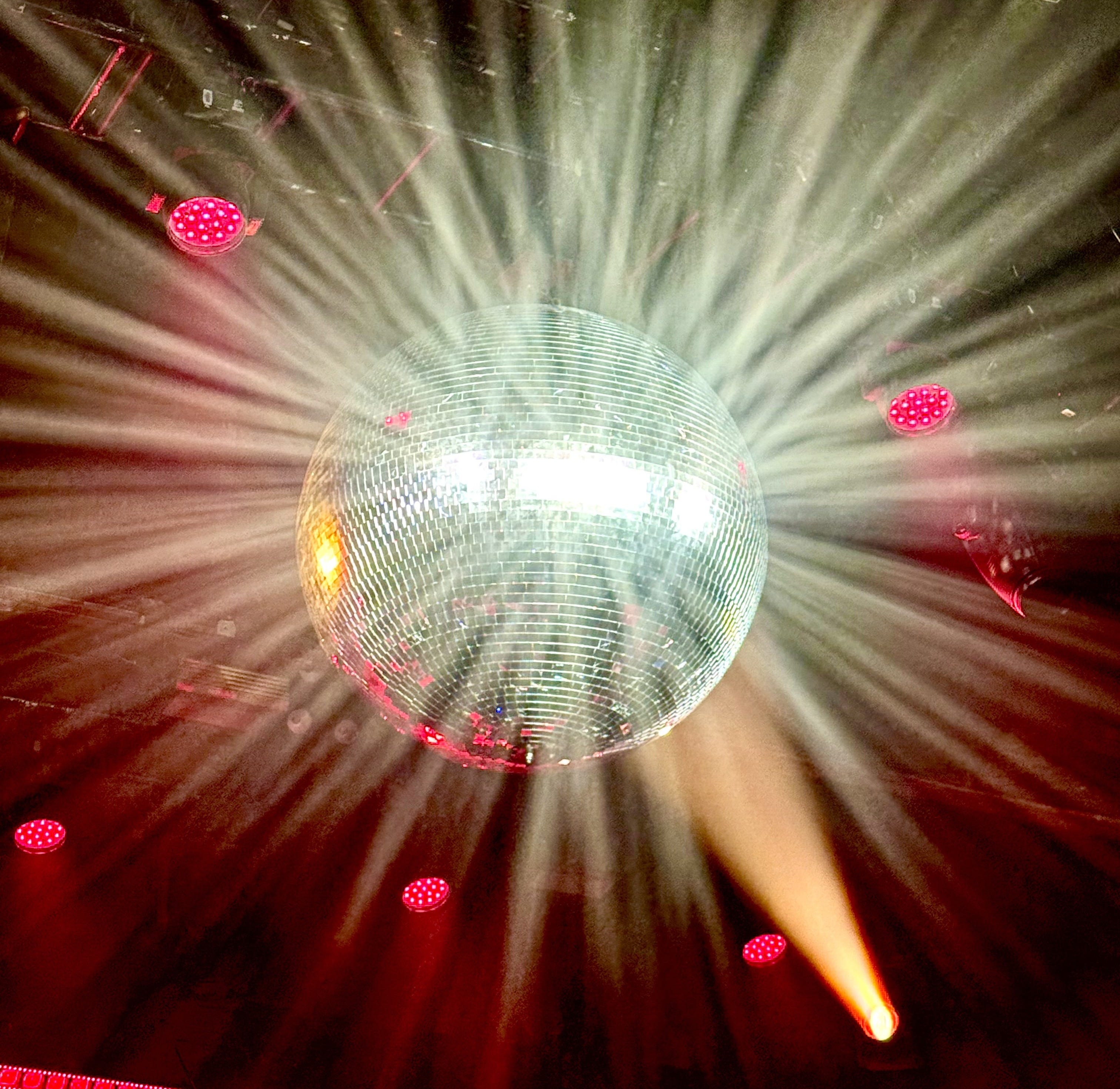
Harry Styles’ “Aperture” is dance in the same way Taylor Swift’s folklore is indie folk: it isn’t, but eh, to him, the average fan doesn’t know the fine details of the politics of pop, so he can get away with co-opting it. Like Swift on her 2020 album, Styles draws from a different style to spice up his discography. And, while the song can make for a compelling switch-up, it’s not trying to be the end-all be-all of the genre it’s mimicking. Given where Styles is in the pop hierarchy (aka the top, along with his female counterpart), his music always puts the inherent ‘marketability’ filter over everything. The music has to sound SMOOTH; it has to sound CATCHY; it has to sound UNALIENABLE.
Pop music has the unique ability to bridge together every genre in one song. A rock guitar, a soul vocal, a hip-hop breakbeat, a funk bass lick, and a synthesized strings section can all find a place in one track, especially when the composer is a knowledgeable, tasteful talent. Björk, Rosalía, Madonna, FKA twigs, SOPHIE, and/or Charli xcx are impeccable examples of mainstream artists who can take dance/electronic music, build both an artistic and marketable narrative from it, incorporate pop and avant-garde aesthetics, and triumph as people who can present something new.
However, pop is also a genre and aesthetic that cannot be divorced from its roots in commodifying the most accessible art form and mass culture.2 It is music designed for spectacle tours, radio play, posters, TV appearances, YouTube videos, viral Twitter clips, Super Bowl half time shows. With the exception of art pop, the classic form is unapologetically safer than most, delicately balancing customer satisfaction with artistic expression. It’s why Justin Bieber’s SWAG double-album didn’t nearly have the wow factor of either Dijon’s Baby or Mk.gee’s Two Star and The Dream Police; in fact, it was just stale and derivative progressive R&B. It’s reasonable for a superstar like Styles to try not to isolate his mega fanbase who are very much lapping up this lukewarm pop composition style. He needs bodies to sell out MSG thirty times over, after all.
In this case, Harry Styles can have a “dance” song, but he can only do so by hiring pop producers instead of electronic ones, shelving the central focus on complex beats and progressions to make more room for his safe vocals, and looking stylish in the accompanying (and equally desaturated) visuals.

Styles would need to pull off a miracle to claim his dance card. (And no, he can’t earn it by association, even if he loads up his global residencies with electronic/electro-pop acts with mass appeal as his openers.) “Aperture” is just a underwhelming pop vocal over a manicured beat. The dance “breaks” read more as pensive pauses between words, and they’re not long enough to upset radio DJs who have to play it once every two hours. If the bloated stomach of “dance” pop somehow hasn’t prolasped yet, the industry might as well squeeze in another album by one of its most lucrative players.
As a pop cynic and self-righteous prick, I’m not shocked that a classic pop artist thinks dance music sounds like this. “Aperture” is a decent single, even with the restrictions Styles’ major label, Kid Harpoon, and pop training put on him. However, if these constraints shackle the rest of the record, then we’re in trouble, Harold!
As an electronic critic, I have to tell everyone to have better standards.
Let’s Listen To Some Good Music Now
As an underground electronic music enthusiast, I can sleep comfortably knowing this nearly-flat audio wave file of a pop song won’t affect the real scene as much. It definitely sucks for producers, though, because Harry Styles has all the money and power in the world to invest in an electronic producer to direct his vision, but he chose to go with the Shawn Mendes guy instead.
If you heard the pop star’s single and thought, “Hm…I could get into more stuff like this!”, I promise you that there are underground musicians both in the classic and pop realms making really cool, way more danceable, way more interesting songs.
Here are four acts I like, in alphabetical order:
Bassvictim
This is definitely the most out-there recommendation, but again, look who is making it. I have to throw one British art school freak act in that probably three people reading this will like. Bassvictim are a charming, scrappy, emerging experimental dance pop duo. Vocalist Maria Manow delivers all her tracks in a sing-songy, schoolgirl chant, layering over herself with added screams until a whole choir blasts out the speakers in intensity. I get why the clicking pops and punchy yet casual lyrics of “Dog Tag freestyle” immediately captured the hearts of self-identifying cool kids; the liberating and nostalgic energy of “27a Pittfield St” also feels anthemic to the young and dumb party-goers of the 2020s. To me, the louder-than-life thumping of the bass mixed with the euphoric screaming makes “Grass is Greener” the most addicting track. Their debut Forever is as twee as it is hard-hitting. Let’s make more sentimental electronic pop music in 2026!
Connector
Shoutout to ANTICS who put me onto this artist by getting him to play at the Issue no. 5 magazine launch party on January 18. His DJ set made me believe in New York City again; he’s sharp enough to pluck out unexpected yet beautiful stems in both fan-favorites and lesser knowns of pop and rock songs, shoving them all in his techno blender to give us something new. His own music is equally as dense and dynamic, definitely ready for the club. “THERMAL IMAGE”, which appears on the Scorcher EP, is a dance hit with an in-your-face, buzzy punk hook forcing its way through a current of snaps, hi-hats, thwacks, and other techno samples. His instrumental breaks run long, but they never get boring; on “SCORCHER”, the main beat regularly gets broken up by sampled vocals, groove guitar riffs, fry, claps, and more. I’d love to see a pop artist use this guy’s production; the combinations could be weird and and dope.
INJI
INJI, a Turkish-NYC dance pop artist who might be all over your TikTok feed, is having her breakout moment with her latest album, SUPERLAME. Her songs totally justify the all-caps discography: tracks like “U WON’T!”, “TEEN ANGST”, “BOYS AIN’T SHIT”, and “IN A MOOD” blare with INJI’s rebellion against growing up, romantic failures, and bouts of self-doubt. She dances through her pain with sickening EDM, hip-hop, and house progressions, even weaving some sounds of the Turkish underground that formed her music into her love letter to her hometown, “ISTANBUL (slightly different)”. I want nothing more than to party to the throbbing, 80s synth-flavored messy pop anthem, “BODEGA”, which even throws in a jagged and clean hyperclash break between verses. She’s a staple figure in all my party playlists, and I’d like to see her in yours, too!
Nick Léon
Tropical Entropy, Nick Léon’s most recent album, has pretty much everything I’d like. Flashes of reggaeton and Afro-Carribbean percussion break up this hazy, synth and reverb-heavy record, which the Miami DJ and producer dubbed “arquitectronica” for its angular and transformative properties. Vocal features by art pop talents like Ela Minus (“Ghost Orchid”), Erika de Casier (“Bikini”), and Casey MQ (“Oceans Apart”) offer a futuristic edge to the dance tracks, indulging in the sensorial pleasures of a sunset, a growing flower, and salty sea waves with their soft and featherweight voices. The whole album is genuinely just a good vibe; if you liked Oklou’s choke enough or Danny L Harle’s recent batch of singles, Léon is another good artist to add to your list.
LCD Soundsystem could’ve played the entirety of 45:33, and I still would have danced from start to finish. I will declare with my full chest that LCD Soundsystem is the greatest band ever. Also, pick another influence, Harold! This band may be the best, but they’re not the origin and/or epitome of electronic/dance music.
To read (if you have the head for it): Diedrich Diedrichsen, The Aesthetics of Pop Music (2023).